

Prof. Hamid Reza Karimi, MAE, IIAV Fellow, ISCM Fellow, AAIA Fellow
Politecnico di Milano, Italy
Hamid Reza Karimi is a Professor of Applied Mechanics in the Department of
Mechanical Engineering at Politecnico di Milano, Milan, Italy. Prof. Karimi’s original research and
development achievements span a broad spectrum within the topic of automation/control systems, and
intelligence systems with applications to complex systems such as vehicles, robotics and mechatronics.
Prof. Karimi is an ordinary Member of Academia Europaea (MAE), Member of European Academy of Sciences
and Arts (EASA), Member of The European Academy of Sciences (MEurASc), Member of Agder Academy of
Science and Letters in Norway, Member of National Academy of Artificial Intelligence (NAAI), Honorary
Academic Member of National Academy of Sciences of Bolivia, Distinguished Fellow of the International
Institute of Acoustics and Vibration (IIAV), Fellow of The International Society for Condition
Monitoring (ISCM), Fellow of the Asia-Pacific Artificial Intelligence Association (AAIA), and also a
member of the IFAC Technical Committee on Mechatronic Systems, the IFAC Technical Committee on Robust
Control, the IFAC Technical Committee on Automotive Control, member of the board of Directors of The
International Institute of Acoustics and Vibration (IIAV) and member of Management Committee of The
International Society for Condition Monitoring (ISCM). Prof. Karimi is the recipient of the 2025 NAAI
Distinguished Artificial Intelligence Scholar Award, the 2021 BINDT CM Innovation Award, the Web of
Science Highly Cited Researcher in Engineering, August-Wilhelm-Scheer Visiting Professorship Award, JSPS
(Japan Society for the Promotion of Science) Research Award, and Alexander-von-Humboldt-Stiftung
research Award, for instance. Prof. Karimi serves/served as Editor-in-Chief and Book Series Editor for
Springer, CRC Press and Elsevier. He has also participated as General Chair, keynote/plenary speaker,
distinguished speaker or program chair for several international conferences in the areas of Control
Systems, Robotics and Mechatronics. Prof. Karimi has served as vice-president for International Prize
"Lombardia è ricerca" and is also the conference chair for the 2026 World Congress on Condition
Monitoring (WCCM2026) to be held in Milan, Italy. Additionally, he is an Honorary Visiting Professor in
the School of Computing & Engineering at the University of Huddersfield, UK.
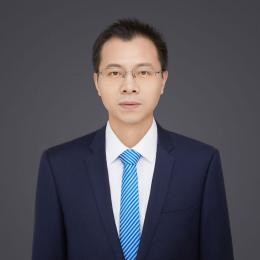
Prof. Wei Xu, IEEE Fellow, IET Fellow
Institute of Electrical Engineering, Chinese Academy
of Sciences, China
Prof. Wei Xu is a Professor at the Institute of Electrical Engineering,
Chinese Academy of Sciences (IEECAS), and Director of the State Key Laboratory of High-Density
Electromagnetic Power and Systems. He received his Ph.D. from IEECAS in 2008 and subsequently held
postdoctoral and research positions at the University of Technology Sydney, Royal Melbourne Institute
of Technology, and Meiji University. From 2013 to 2023, he was a Professor at Huazhong University of
Science and Technology, before rejoining IEECAS in 2024. He is a Fellow of both the IEEE and the IET.
His research focuses on the design, control, and system integration of linear machines and drives. He
has served as General Chair for multiple international conferences and is an Associate Editor for
several IEEE journals, including IEEE Transactions on Industrial Electronics and IEEE Transactions on
Power Electronics.

Prof. Giuseppe Carbone, IEEE Senior Member
East China Jiaotong University, China
Giuseppe Carbone is Professor at DIMEG, University of Calabria, since
2018. Since 2020 he is Chair of the IFToMM TC on Robotics and Mechatronics. He has got the Master
and Ph.D. degree at University of Cassino (Italy) where he has been a Key Member of LARM (Laboratory
of Robotics and Mechatronics) for about 20 years. He has carried out several periods of study and
research abroad in Germany, Japan, China, South Korea, Brazil, Spain, UK, France, also delivering
regular teaching courses in Spain and UK. The duties of his academic position include supervising or
co- supervising students at bachelor, master, and PhD level as well as the supervision of several
visiting scholars/researchers/professors from foreign countries.
His research interests cover aspects of Robotics, Mechatronics, Engineering Design, Mechanics of
Manipulation and Grasp with over 500 research paper outputs, 20 patents, and 16 Phd completions. He
edited/co-edited four books that have been published by Springer and Elsevier International
Publishers. He has been member of about 20 PhD evaluation Commissions and Viva in Italy, Spain,
Finland, UK, Romania, Mexico. He has delivered Invited Keynote or Plenary speeches or Seminars at
more than 30 International events. He has been principal Investigator (PI) or co-PI of more than 20
projects including 7th European Framework, H2020 funds, Horizon Europe collecting more than 7
million Euros in competitive funds. He serves in the editorial board of several international
journals, including being Editor-in-Chief of ROBOTICA (Cambridge Univ. Press), Section Editor in
Chief of Journal of Bionic Engineering (Springer), Machines (MDPI), Robotics (MDPI), Technical
Editor of IEEE/ASME Transactions on Mechatronics, Associate editor of IEEE RA-L, ASME Journal of
Autonomous Vehicles and Systems, Advanced Robotic Systems and many others.
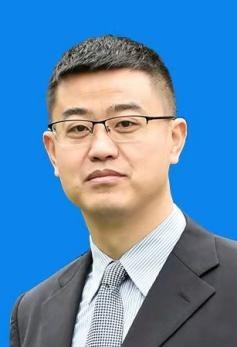
Prof. Junhui Zhao, IET Fellow
Beijing Jiaotong University, China
Professor, School of Electronic and Information Engineering, Beijing
Jiaotong University. His research interests include 6G, vehicular networks (IoV), rail transit
communications, and AI applications. He is a Fellow of the China Institute of Communications
(CIC), a Fellow of the Institution of Engineering and Technology (IET) and a member of its
Fellowship Assessment Panel, a Distinguished Member of the China Computer Federation (CCF), and
Deputy Director of the CCF Smart Transportation Chapter, among other appointments. He has served
as PI for a Key Joint Program of the NSFC, project leader for tasks under the National Key R&D
Program of China, and PI for multiple NSFC General Programs. He serves on the editorial boards of
over ten authoritative journals, including several IEEE Transactions. He has published 200+
papers. His work has received over ten science and technology awards, including the CIC Science
and Technology Award (First Class), the CIE Science and Technology Award (First Class), the
Ministry of Education Second Prize for Science and Technology Progress, and the IEEE Jack Neubauer
Memorial Award.
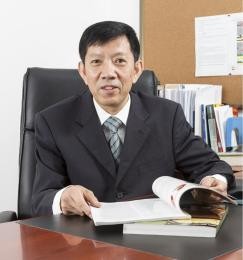
Prof. Yong Yue, IET Fellow, IMechE Fellow
Xi'an Jiaotong-Liverpool University,
China
Yong Yue (BEng Northeastern China, PhD Heriot-Watt UK, CEng, FIET,
FIMechE, FHEA) is a Professor at the Department of Computing, and Director of the Virtual
Engineering Centre (VEC) and Suzhou Municipal Key Lab for Intelligent Virtual Engineering. He
was Head of the Department of Computer Science and Software Engineering (2013-2019). Prior to
joining XJTLU, he had held various positions in industry and academia in China and the UK,
including Engineer, Project Manager, Professor, Director of Research and Head of Department.
Professor Yue has experience in learning and teaching, research and enterprise as well as
management. He has led a variety of research and professional projects supported by major
funding bodies and industry. He has also led curriculum development at both undergraduate and
postgraduate levels. He has nearly 300 peer-reviewed publications and supervised 38 PhD students
to successful completion.